
How concealment practices on social networks are transforming luxury consumption
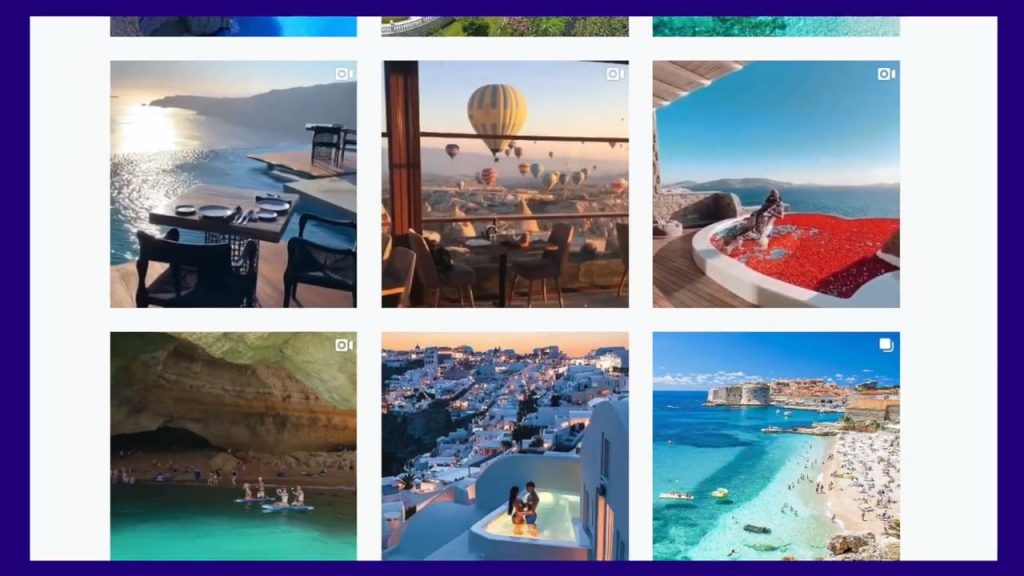
D. student Marina Leban talks about the article she published in the Journal of Business Research with her supervisor Ben Voyer and Professor Yuri Seo of the University of Auckland, which investigates how observational practices transform the consumption of luxury goods on visual social media.
Luxury consumption practices of high-end luxury prosumers and lurkers on a visual social media platform

Marina Leban talks about her doctoral thesis, which examined the luxury consumption practices of high-end luxury prosumers and lurkers on the visual social media platform Instagram through three articles, two of which have already been published in top academic journals with thesis supervisor Ben Voyer.
We survived! What managers can learn from SMEs that have successfully weathered the Greek economic crisis

Focusing on the Greek economic crisis, one of the toughest and most prolonged on a global scale, this research concentrates on both the anthropocentric and commercial factors that helped SMEs survive, providing a valuable survival manual. Based on quantitative research, the article comprises two studies. 250 SMEs were included in the first study, while 189 of those that survived took part in the second. According to the results, SME survival is shown to be affected by: (a) the personality traits and skills of entrepreneurs that affect the market and entrepreneurial orientations of SMEs, (b) the adoption of such orientations that continue to have an impact on business performance, and finally (c) the implementation of a relevant strategy to achieve higher quality standards for products and services, combined with relevant tactics for downsizing, marketing actions, extraversion and financial management.
Exploration de l’influence de la culture indienne sur la négociation

L’Inde prend une place de plus en plus importante dans l’économie mondiale et la plupart des pays vont être amenés à démultiplier leurs échanges et donc leurs négociations avec cette dernière dans un futur proche. Pourtant, le processus de négociation en Inde été l’objet de très peu de recherches. Afin de pallier le manque de connaissance sur ce sujet, cette recherche exploratoire a pour objectif d’explorer l’influence de la culture indienne sur le processus de négociation.
Understanding the training-employment mismatch issue

To explain the « education-job mismatch », this study seeks to determine the « skill set » needed by today’s graduates pursuing a career in the international context. Priority is given to identifying the particular skills they will need, with a specific focus on ‘cross-cultural management’ (CCM) skills. Using qualitative methods (focus group, interviews and interactive seminar), the results reveal the extent of the mismatch between higher education and employment. Specifically, there is: a lack of transferable CCM skills; a mismatch between the supply of CCM skills development in higher education and the needs of recruiters; and a shortage of CCM skills within the curriculum. Based on these findings, a model is proposed to address the mismatch between higher education and employment.
Une analyse biopolitique de la communauté sur les plateformes pair-à-pair

Pitch pour le Prix FNEGE 2020 de la Meilleure Thèse en 180 secondes
Prix de thèse AFC
La thèse a été soutenue à l’ESCP Business School.
De l’intérêt d’impliquer les clients membres dans les phases d’idéation et de sélection d’un processus de co-innovation

Pitch pour le Prix FNEGE 2020 de la Meilleure Thèse en 180 secondes
Prix de thèse AFM
ESSCA School of Management
Directeurs de thèse: Sonia CAPELLI et William SABADIE
Intentions d’achat d’objets connectés des consommateurs : les enjeux environnementaux sont-ils importants ?
Cette recherche présente un modèle conceptuel qui considère trois antécédents écologiques pertinents à l’adoption de produits écologiques (croyances et préoccupations environnementales, utilité perçue pour l’environnement) et évalue leur influence sur les intentions d’achat d’objets connectés. De plus, cette étude révèle le rôle modérateur de deux dimensions du matérialisme (succès et bonheur) dans la relation entre les préoccupations pour l’environnement et les intentions d’achat d’objets connectés.
Moteurs et voies du succès du NPD dans le marketing

Dans une dynamique d’open-innovation, le marketing coopère de plus en plus fréquemment avec le design externe dans le processus de développement de nouveaux produits (PDNP). Cependant, la relation entre une fonction orientée business (le marketing) et un partenaire créatif (le design externe) peut s’avérer complexe et entraîner un échec commercial. Les conditions du succès sont encore peu connues.
Building credible brands in (post-)globalized markets

Consumers in Western markets are increasingly critical of globalization and are returning to local values. Companies must therefore decide whether to pursue global brand strategies and/or rejuvenate local brand strategies. To explore the implications of market globalization on consumer preferences, we use signal theory to investigate the roles of perceived globality vs. perceived brand locality as signals of brand credibility, associated downstream effects and boundary conditions of application. This study is carried out in two countries with different levels of globalization. In globalized markets, perceived brand globality is a weaker brand credibility signal than perceived brand locality, whereas in globalizing markets, both signals are of equal importance.