
“What about you, how would you react if your company practiced favoritism?”

1357 vues

Partager

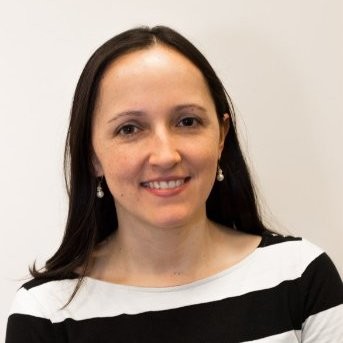
In a research paper entitled “Legitimacy, Particularism and Employee Commitment and Justice” published in the Journal of Business Ethics, a 4* NEOMA journal (Rank 1 FNEGE, Rank 2 CNRS), Helena González-Gómez, professor in the People & Organizations department, in collaboration with Sarah Hudson and Cyrlene Claasen (Rennes School of Business), examine the practice of favoritism in companies and its impact on employee commitment.

Today, you can be proud! It’s your first day at your new company! You’ve won over your new employer with your skills and now it’s time to show what you can do… You’re chatting with another employee at the coffee machine: he shamelessly claims to be the treasurer’s nephew and that’s why he recently joined the company. How would you react in this situation? What if your company practiced favoritism rather than meritocracy?

This paper, written by Helena González-Gómez and her co-authors, analyzes the difference between the two models of managerial practices and their impact on employee engagement. “Overall, the results are clear: when your company’s HR department favors meritocracy more than it allows it, it has a clear negative impact on engagement. Employees feel de facto less involved and less concerned because they feel they are being treated unfairly by their employer. A result that has no impact on whether or not you took advantage of the system.”

However, based on the study that was conducted in China, a distinction was made between family businesses on the one hand and non-family businesses on the other. “In non-family businesses, people who have lived in an environment where this practice of favoritism was used, show a full understanding of the system and accept it. It is then this historical link that impacts your commitment.” Conversely, in family businesses, the association of your history with this practice has no impact. “Favouritism will always have a negative impact on your commitment. In a family model, you expect to find your boss’s best friend’s wife in the executive assistant position, or his brother as treasurer. You don’t fight this system because you know it’s unfair. So you accept the rules that are induced but logically this has a strong negative impact on your commitment.”
Mots clés

Vidéos de la même institution

03:15
Sustainability depends less on consumer choices and more on how supply chains are structured. Research on Brazil’s beef sector shows that, despite the BRSL initiative to improve sustainability, results fell short. Four types of distance geographical, organizational, cultural, and relational hindered collaboration. These gaps created communication problems and weakened trust among stakeholders. Real progress requires external mediators, such as governments or NGOs, to reconnect the entire supply chain.
SAUER Philipp - NEOMA Business School |
04:42
For over 40 years, poor waste management in Italy allowed the Mafia to illegally dispose of toxic waste, causing a major health crisis and soaring cancer rates. Despite late government intervention, economic interests consistently outweighed environmental and public protection. This crisis shows that waste management is fundamentally about power and social justice, with certain communities unfairly bearing the burden.
LOBBEDEZ Elise - |
04:12
Why talk about disability at work? Disability affects 30% of the population, often invisible and rarely discussed. Yet, open conversations about disability in the workplace promote inclusion and improve accessibility for everyone through the “curb-cut effect.” Discover why every effort matters to create a fairer and more welcoming work environment.
STARZYK Anita - NEOMA Business School |
03:11
Gender equality goes beyond numbers it’s about inclusion. While laws like Copé-Zimmermann have increased women’s representation, true equality means ensuring their voices influence decisions and their contributions are valued. Intersectionality shows that barriers are often compounded by factors like ethnicity or age. The real transition is moving from diversity to inclusion creating cultures where every voice counts and equality drives innovation and resilience.
TAGHAVI Shiva - NEOMA Business School |

Vidéos de la même thématique

This research compares student entrepreneurial ecosystems in France and Norway, focusing on how students access support, resources, and networks. In France, the system is centralized, driven by key actors like Student Hubs for Innovation, Transfer and Entrepreneurship, called PEPITE. In Norway, it is open and collaborative, with strong student associations and community ties. Using interviews and social network analysis, I explored the access and the circulation of information among actors in student entrepreneurial ecosystems. The results reveal different paths to innovation shaped by culture, policy, and education. Supporting student entrepreneurship is not just about funding or training. It’s about building inclusive ecosystems where students, mentors, and institutions work together.
HU Dijia - Faculté des Sciences Economiques et de Gestion Strasbourg |
More organizations use AI in the hiring process than ever before, yet the perceived ethicality of such processes seems to be mixed. With such variation in our views of AI in hiring, we need to understand how these perceptions impact the organizations that use it. In two studies, we investigate how ethical perceptions of using AI in hiring are related to perceptions of organizational attractiveness and innovativeness. Our findings indicate that ethical perceptions of using AI in hiring are positively related to perceptions of organizational attractiveness, both directly and indirectly via perceptions of innovativeness, with variations depending on the type of hiring method used. For instance, we find that individuals who consider it ethical for organizations to use AI in ways often considered to be intrusive to privacy, such as analyzing social media content, view such organizations as both more innovative and attractive.
FIGUEROA-ARMIJOS Maria - FNEGE |
The aim of this paper is to explore how a number of processes combined to create the micro-level strategies and procedures that resulted in the deadliest and most tragic forest fire in Portuguese history.
ABRANTES Antonio - TBS Education |
Artificial intelligence is already transforming lives and organizations. It brings a huge potential, for example, to achieve hyper-performance. Which is not about adding more trainings. But rather finding and removing obstacles from human minds. And artificial intelligence can facilitate that efficiently. It can help us to learn more about our own intelligence. Thus, giving us a unique chance to finally re-unite both intelligences.
STIBE Agnis - EM Normandie |

S'abonner aux vidéos FNEGE MEDIAS